
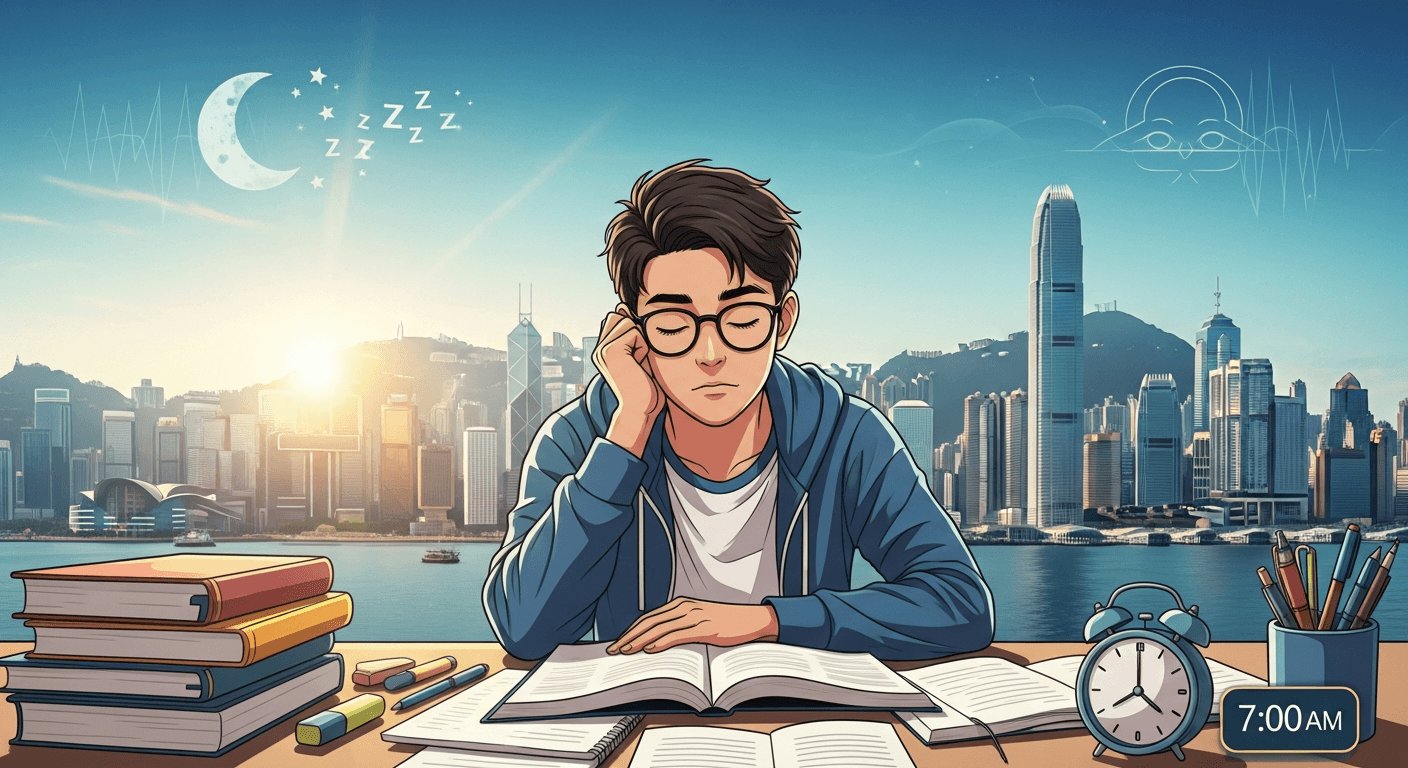
Beyond All-Nighters: Optimizing Sleep for HKDSE Exam Success
It’s 2 AM. The glow of your desk lamp illuminates a mountain of textbooks and past papers. The faint smell of instant noodles hangs in the air. Outside, Hong Kong is finally quiet, but inside your mind, the pressure of the upcoming HKDSE exams is a deafening roar. In this high-stakes environment, pulling an "all-nighter" can feel like a badge of honour—a testament to your dedication. But what if this common practice is actually sabotaging your chances of success?
The truth is, in the marathon of HKDSE exam preparation, sleep isn’t a luxury you can afford to cut. It’s your most powerful, underrated study tool. It’s time to move beyond the brute-force approach of sleepless nights and learn how to study smarter by harnessing the science of sleep. Let's explore how optimizing your rest can give you the mental edge you need to walk into that exam hall with confidence and clarity.
The Science of Sleep: Your Brain’s Overnight Revision Assistant
While you’re asleep, your brain isn't just switching off. It’s running a highly sophisticated maintenance and organization program, crucial for learning and memory. Understanding this process can change the way you view your nightly rest.
Memory Consolidation: From Short-Term to Long-Term Storage
Imagine your brain is a massive library. During the day, as you study everything from Chinese history to calculus, you're essentially dumping new books (information) onto the library floor. It’s messy and hard to find anything. When you sleep, your brain’s librarians get to work.
During deep, non-REM (NREM) sleep, your brain replays the day’s learning, transferring important information from your temporary short-term memory (the floor) to your stable long-term memory (the organized bookshelves). Without this process, the information you crammed the day before is likely to get lost in the clutter, making it almost impossible to recall under exam pressure.
Problem-Solving and Insight: Connecting the Dots
Ever woken up with a solution to a problem that seemed impossible the night before? That’s the magic of REM (Rapid Eye Movement) sleep. During this stage, your brain forms new and unusual connections between unrelated ideas. This is critical for HKDSE success, where you're often asked to tackle unseen questions or apply concepts in novel ways. A well-rested brain is a more creative and flexible problem-solving machine.
Quick Fact: The Sleep Cycle
Your brain cycles through different stages of sleep (light, deep, and REM) roughly every 90 minutes. Completing 4-5 of these full cycles each night is essential for optimal cognitive function and memory consolidation. This is why getting a full 7-9 hours of sleep is far more effective than a few fragmented hours.
The High Cost of the "All-Nighter" Culture
In the competitive atmosphere of Hong Kong education, it’s easy to think that more hours spent studying equals better results. However, sleep deprivation leads to a point of diminishing returns, where the costs far outweigh the perceived benefits.
- Cognitive Fog: Lack of sleep impairs your attention, concentration, and critical thinking. You might find yourself reading the same paragraph over and over without understanding it. On exam day, this can translate to misreading questions or making careless mistakes that cost you precious marks.
- Memory Impairment: Ironically, the all-nighter you pull to cram more information actively prevents your brain from storing it effectively. You’re pouring water into a leaky bucket.
- Increased Stress and Anxiety: Sleep deprivation heightens the activity in the emotional centers of your brain, making you more susceptible to stress, anxiety, and mood swings. This can lead to exam panic and make it harder to think clearly and logically when you need it most.
Your Action Plan: Building a Pro-Sleep HKDSE Study Strategy
Trading sleepless nights for restorative rest doesn’t mean studying less; it means studying smarter. It’s about integrating efficient study habits with a sleep-friendly lifestyle.
Step 1: The "Power-Down Hour"
The hour before you plan to sleep is sacred. This is your time to signal to your brain that it’s time to wind down.
- Ditch the Screens: The blue light from your phone, tablet, and computer screen tricks your brain into thinking it's still daytime, suppressing the production of melatonin, the hormone that helps you sleep. Switch to reading a physical book (not a textbook!) or listening to calming music.
- Create a Routine: A consistent pre-sleep routine, like taking a warm shower or doing some light stretching, can help regulate your internal body clock, making it easier to fall asleep and wake up.
Step 2: Optimize Your Study and Sleep Environment
Your physical space has a huge impact on your habits.
- Your Bed is for Sleep Only: Avoid studying on your bed. Your brain should associate your bed with rest, not with the stress of quadratic equations. Create a dedicated study space, even if it’s just a specific corner of your room.
- The Sleep Cave: Make your bedroom as cool, dark, and quiet as possible. Blackout curtains and earplugs can be your best friends during the noisy Hong Kong nights.
Step 3: Study with Efficiency to Create Time for Sleep
The single biggest reason students pull all-nighters is a feeling of being overwhelmed and behind. The solution isn't to sacrifice sleep but to make your study hours more productive. This is where modern educational technology can be a game-changer.
Instead of trying to revise every single topic with equal intensity, focus your energy on your weaknesses. Modern AI-powered learning platforms are designed to help you do exactly that. For instance, Thinka’s platform uses adaptive algorithms to identify the specific concepts you’re struggling with based on your performance in HKDSE practice questions. It then provides a personalized learning path, giving you more practice where you need it most.
This targeted approach means you stop wasting time on material you've already mastered. Your study sessions become shorter, more focused, and dramatically more effective. By reclaiming these hours, you create the space in your schedule for the 7-9 hours of sleep your brain desperately needs to perform at its peak. It's the ultimate strategy for sustainable exam preparation.
Ready to make your study sessions more efficient? Start Practicing in our AI-Powered Practice Platform and see how personalized learning can transform your revision schedule.
Pro Tip: Napping & Nutrition
Feeling a slump in the afternoon? A short 20-30 minute "power nap" can significantly boost alertness and performance without leaving you groggy. Also, avoid heavy meals, caffeine, and sugary drinks close to bedtime, as they can disrupt your sleep quality.
The Unavoidable All-Nighter: A Damage Control Guide
Let's be realistic. Sometimes, despite your best efforts, a late night might happen. If you find yourself in this situation, here’s how to minimize the damage:
- Stay Hydrated: Drink plenty of water. Dehydration exacerbates the effects of fatigue.
- Snack Smart: Avoid sugar-loaded snacks that lead to a crash. Opt for protein and complex carbs (like nuts or a hard-boiled egg) for sustained energy.
- Strategic Caffeine: Use coffee or tea strategically in small doses. Don’t overdo it, as it can lead to jitters and a major crash later.
- Get Some Sunlight: The morning after, expose yourself to natural sunlight as soon as possible. This helps to reset your internal clock and improve alertness.
- Plan Your Recovery: Do not make this a habit. Plan for an earlier bedtime the following night to begin repaying your "sleep debt."
Conclusion: Your Best Performance Awaits
The journey to HKDSE success is a marathon, not a sprint. The "hustle at all costs" mindset that champions sleepless nights is outdated and counterproductive. Your brain is the most complex and powerful tool you have, and sleep is its essential maintenance cycle.
By shifting your perspective and viewing sleep as a strategic part of your study plan, you unlock a powerful advantage. Combine restorative rest with efficient study tools, like the HKDSE resources available on Thinka, to ensure every hour you spend studying is as productive as possible.
So tonight, close the textbook an hour earlier. Put away your phone. Allow your brain the time it needs to sort, store, and consolidate. You’ll wake up sharper, calmer, and better prepared to conquer the challenges ahead. Your future self will thank you.