
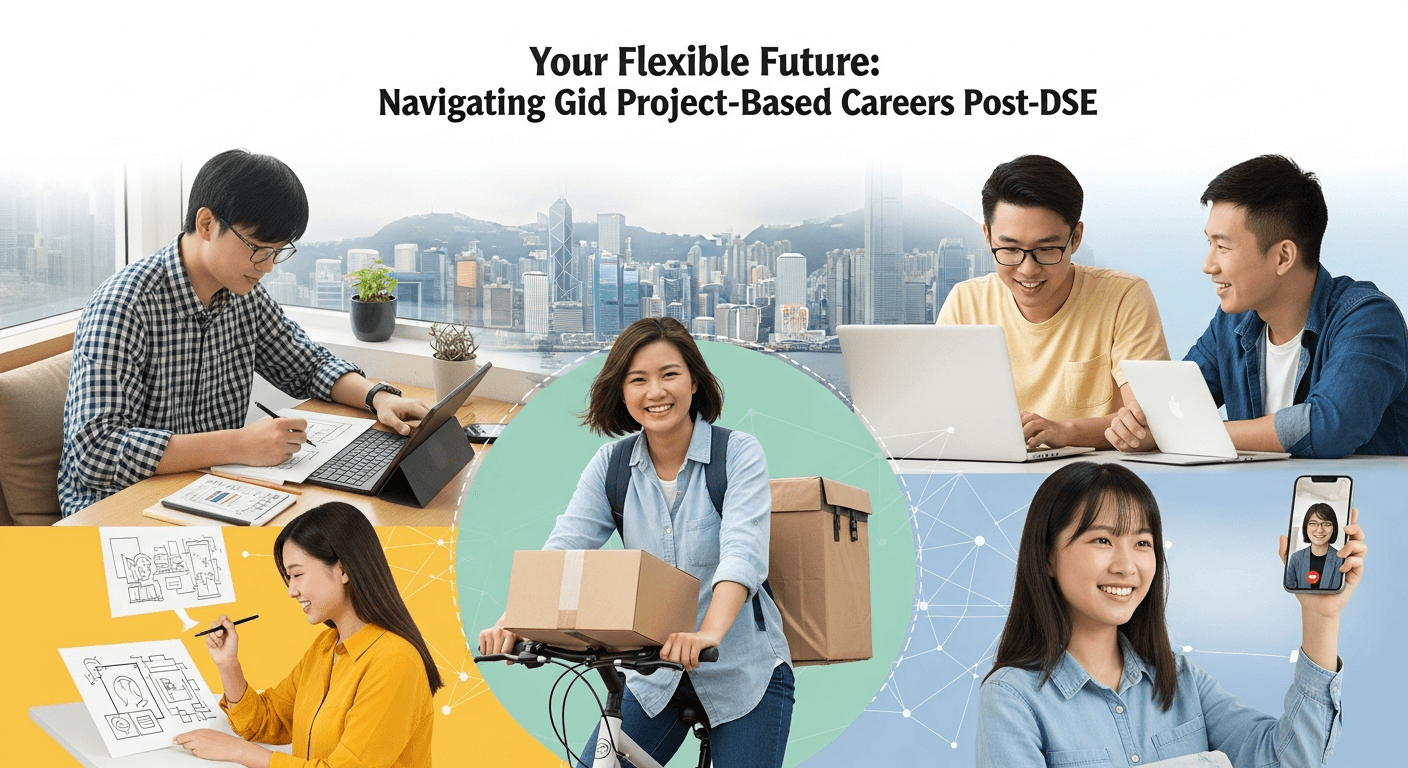
Your Flexible Future: Navigating Gig Work and Project-Based Careers Post-DSE
Let's be real. As you navigate the final stretch of your HKDSE journey, the pressure is immense. Every past paper, every late-night study session, is focused on one thing: getting into a good university and securing a stable career—the proverbial "iron rice bowl" (鐵飯碗) our parents and grandparents dreamed of. But what if the world of work you’re preparing for is transforming right under your feet?
The traditional 9-to-5 job for life is no longer the only path to success. A new, more dynamic landscape is emerging: the world of gig work, freelancing, and project-based careers. This isn't about instability; it's about flexibility, autonomy, and building a career that truly fits you. And believe it or not, the very skills you're honing for your DSE exams are the perfect training ground for this exciting future. Let's explore how you can navigate this new world and why your post-DSE future is more flexible than you think.
What Exactly is the "Gig Economy"?
You’ve probably heard the term, maybe in relation to Foodpanda riders or part-time tutors. But the gig economy is so much more than that. At its core, it means moving away from a single, permanent employer towards a model of working on short-term contracts or freelance projects for multiple clients.
Think of it as being a specialist for hire. Instead of belonging to one company, your skills belong to you, and you deploy them on various interesting projects.
Examples in Hong Kong:**
This isn't a niche trend. It's a global shift. In Hong Kong, more and more young people are embracing this model for the freedom and diverse experience it offers. It’s about building a portfolio career—one based on a collection of your skills and projects, not just a job title.
Why This Career Path is More Than Just a Trend
The rise of project-based work isn’t happening by accident. It’s driven by powerful shifts in technology and what people value in their careers. Here’s why it's gaining so much momentum:
1. Unmatched Flexibility and Autonomy
This is the biggest draw for many. A project-based career allows you to have greater control over your schedule, your workload, and even where you work. You can tailor your work around your studies, hobbies, or other life commitments, rather than the other way around. It’s the ultimate antidote to the rigid corporate ladder.
2. Rapid Skill Development
In a traditional job, you might work on similar tasks for years. As a freelancer, every new project is a new problem to solve and a new skill to learn. One month you could be building an e-commerce site for a fashion brand; the next, you might be creating a marketing strategy for a wellness app. This constant variety makes you incredibly adaptable and versatile—two of the most sought-after qualities in today's job market.
3. Pursuing Your Passion
Are you passionate about creative writing but planning to study business? Do you love video editing but are enrolled in a science stream? Gig work allows you to monetize your passions and build expertise in areas outside your formal education. It’s a powerful way to integrate what you love with how you earn a living.
Pro Tip: Platforms like Upwork, Fiverr, and even local Hong Kong job boards are filled with freelance opportunities. Start browsing now just to see what kind of skills are in demand. You might be surprised to find that skills you already have are highly valued!
The Secret Weapon: How DSE Prepares You for a Gig Future
You might feel like you're just memorizing facts and formulas, but the process of preparing for the HKDSE is forging critical skills that are essential for success in a project-based career. You're already in training, you just might not realise it.
Time Management and Self-Discipline
Juggling English, Chinese, Maths, Liberal Studies (or CitCS), and two or three electives? That’s not just studying; that's project management. You are the project manager of "Operation: Ace the DSE." You have to allocate resources (your time and energy), manage deadlines (SBAs, mock exams), and stay motivated without a boss looking over your shoulder. This is the exact discipline a freelancer needs to manage multiple clients and deadlines.
Problem-Solving and Adaptability
Every multi-part question in a science paper or a document-based question in History requires you to deconstruct a complex problem, apply relevant knowledge, and formulate a coherent solution. This analytical mindset is precisely what a client hires you for. They don’t just want a task-doer; they want a problem-solver.
Self-Directed Learning
To excel in the gig economy, you must be a lifelong learner. When a client asks for something involving a new software or technique, you need to be able to learn it quickly. Your DSE preparation is a masterclass in this. You constantly identify your weak spots, find resources to improve, and practice until you master the concept.
This is where modern educational tools can give you a significant edge. An AI-powered practice platform like Thinka doesn't just give you endless questions. Its adaptive technology pinpoints your specific weaknesses and creates a personalized learning path for you. By using such a platform, you're not just improving your **HKDSE practice**; you're actively training your ability to learn efficiently and independently. Mastering this skill now will pay huge dividends in a future where you are your own boss. Ready to sharpen your skills? Start Practicing in AI-Powered Practice Platform and see how targeted practice can boost your study efficiency.
Actionable Steps: How to Start Building Your Flexible Future Today
The future may seem far away, but you can start laying the groundwork for a dynamic, project-based career right now, even while studying for the DSE.
1. Create a "Portfolio of Evidence"
Forget the traditional CV. Start documenting what you can *do*. This doesn't have to be formal.
- For writers: Start a simple blog on Medium or WordPress about a topic you love.
- For artists/designers: Create an Instagram or Behance profile to showcase your work. - For coders: Start a GitHub account and upload even your smallest personal projects.
2. Embrace Micro-Learning
Use your study breaks productively. Instead of scrolling mindlessly, spend 15-20 minutes learning a new, practical skill online.
- Learn basic video editing with DaVinci Resolve (it’s free!).
- Take a free Google Digital Garage course on the fundamentals of digital marketing.
- Try an introductory Python course on Codecademy.
3. Network Beyond Your School Walls
Attend online webinars, join Discord or Facebook groups related to your interests (e.g., Hong Kong writers, local photographers), and connect with people. In the gig economy, your network is your net worth. It’s where you’ll find collaborators, mentors, and future clients.
Does a University Degree Still Matter?
With all this talk of skills and portfolios, you might be wondering: "So, should I even bother with university?" The answer is a resounding yes.
A university degree and a freelance career are not mutually exclusive; they are complementary.
- Deep Knowledge & Credibility: A degree gives you the deep, foundational knowledge in your chosen field. It provides the "why" behind the "what," allowing you to tackle more complex, higher-value projects. It also provides instant credibility.
- A Safe Place to Experiment: University is the perfect environment to start taking on small freelance projects. You have access to resources, mentors (your professors), and a network of talented peers. You can build your portfolio with a safety net.
- Essential Soft Skills: Group projects, presentations, and extracurricular activities are invaluable for developing the communication, collaboration, and leadership skills that are vital for managing client relationships.
Think of your degree as your core operating system, and your freelance projects as the apps you run on it. You need a strong foundation to build upon. To ensure that foundation is solid, make sure your grasp of core subjects is strong. You can always review key concepts with resources like Thinka's HKDSE Study Notes.
Your Future, Your Design
The path after your HKDSE exams is no longer a single, straight road. It's an open map with multiple routes to a fulfilling and successful career. The rise of gig work and project-based careers puts the power back in your hands—the power to design a work-life that is flexible, varied, and aligned with your passions.
The discipline, resilience, and problem-solving skills you are building right now are your ticket to this future. See your DSE preparation not as a final hurdle, but as the foundational training for becoming the adaptable, self-driven CEO of your own career. The future is flexible—and you're more prepared for it than you think.