
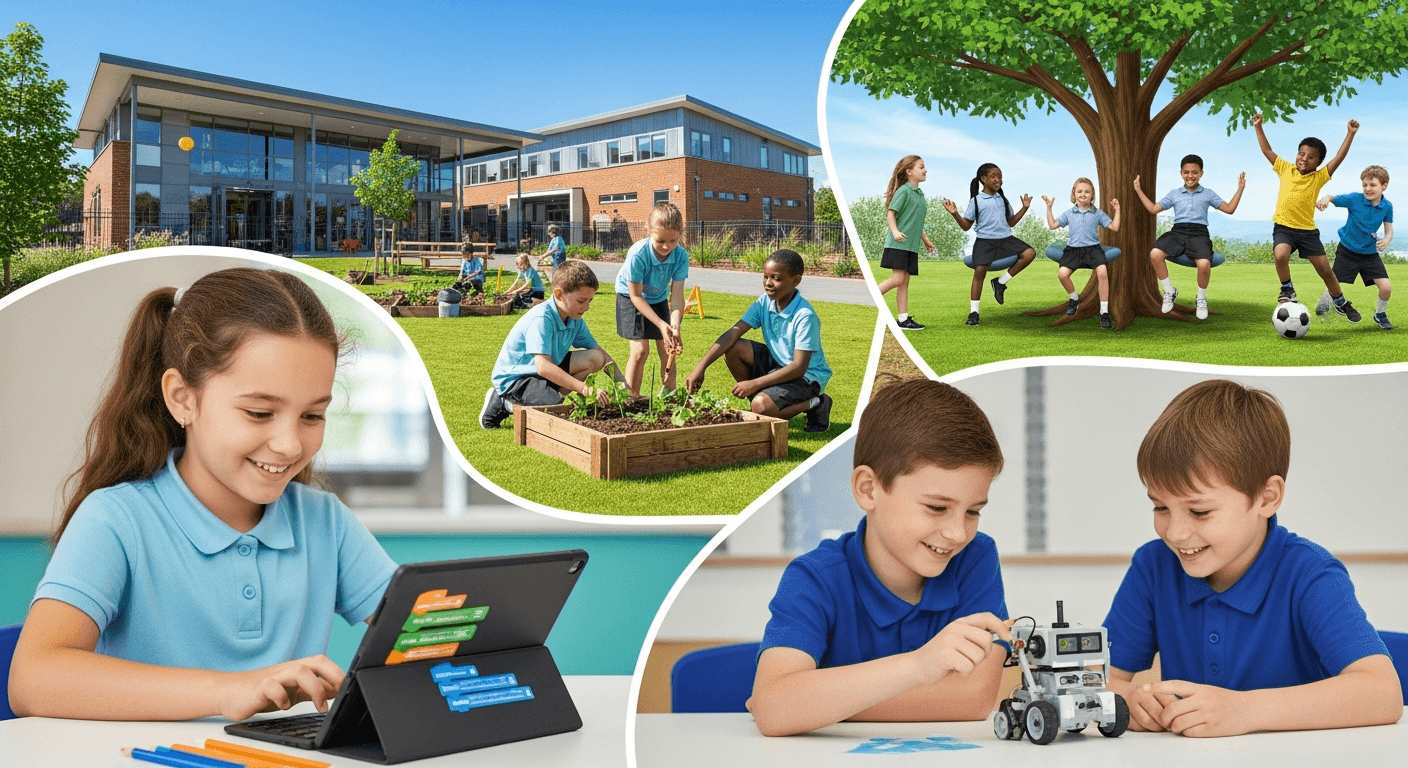
Beyond Academic Rankings: Evaluating Secondary Schools for Future-Ready Skills and Holistic Student Well-Being
As primary school draws to a close, parents often find themselves standing at a critical crossroads. The upcoming examinations mark the end of one chapter, but an even bigger challenge looms on the horizon: choosing the right secondary school. For decades, the default strategy for primary school parents has been relatively straightforward—look at the academic rankings, check the historical examination results, and aim for the top of the list. However, in today’s rapidly evolving world, that traditional approach is no longer enough to guarantee a child's long-term success or happiness.
We are living in an era where technological advancements and global shifts are redefining what it means to be "educated." The World Economic Forum recently highlighted that the core skills required for the future workforce are shifting dramatically toward analytical thinking, complex problem-solving, and technological adaptability. For parents currently navigating exam preparation with their primary schoolers, this presents a new set of priorities. It is time to look beyond the brochure and evaluate secondary schools based on how well they cultivate future-ready skills and nurture holistic student well-being.
The Paradigm Shift: Why Academic Rankings Don't Tell the Whole Story
Academic excellence is undoubtedly important, but it is only one piece of a much larger puzzle. Secondary school is a formative period where young teenagers develop their identities, build resilience, and establish lifelong learning habits. A school that looks perfect on paper because of its top-tier test scores might rely heavily on rote memorization and high-pressure drilling—methods that can lead to rapid student burnout.
Quick Fact: Recent educational psychology studies indicate that students who report high levels of well-being and belonging at school are significantly more likely to exhibit intrinsic motivation, leading to better long-term academic outcomes than those driven purely by external pressure.
Instead of relying solely on historical grades, modern primary school parents should consider a new formula for their child’s development. Think of it mathematically: \( \text{Future Success} = (\text{Academic Foundation} \times \text{Adaptability}) + \text{Emotional Well-being} \). If any of these variables drop to zero, the overall outcome suffers. Therefore, finding a secondary school that balances these elements is crucial for your child's holistic growth.
Pillar 1: Cultivating Future-Ready Skills and Digital Literacy
When evaluating a prospective secondary school, it is essential to look at their curriculum through the lens of the future. Will your child be learning how to memorize answers, or will they be learning how to ask the right questions? Future-ready schools understand that technology is a tool for creation, not just consumption.
Look for institutions that actively integrate modern technology into their daily teaching methods. Ask questions during school tours about their digital literacy programs. Do they teach students how to critically evaluate online information? Are there opportunities for coding, robotics, or media literacy? Furthermore, observe how the school adapts to innovations like artificial intelligence. Forward-thinking schools are teaching students how to collaborate with AI rather than banning it outright.
This technological integration should also extend to how students study. For instance, the use of an AI-powered learning approach allows students to break free from traditional, linear study methods. When schools or parents introduce advanced educational tools early on, students learn to take ownership of their academic progress. They transition from passive listeners to active participants in their educational journey, which is a vital skill for both higher education and the modern workplace.
Pillar 2: Prioritizing Holistic Student Well-Being
The transition from primary to secondary school involves significant physical, emotional, and social changes. The workload increases, social dynamics become more complex, and the pressure of higher-stakes examinations begins to mount. Therefore, evaluating a school's pastoral care and mental health support systems is just as vital as reviewing their academic track record.
Pro Tip for Parents: During school open houses, bypass the shiny trophy cabinets and head straight for the student support services. Speak to the guidance counselors. Ask them directly: "How does the school support students who are struggling academically or socially?" or "What proactive mental health programs are integrated into the curriculum?"
A holistic school environment ensures that students have access to safe spaces, mentorship programs, and extracurricular activities that allow them to decompress. Schools that emphasize sports, arts, and community service alongside academics demonstrate a commitment to developing well-rounded individuals. Remember, a child cannot perform optimally in their studies if they are struggling with unchecked anxiety or stress.
Pillar 3: Embracing Personalized Learning Approaches
Every child has a unique learning profile. Some grasp mathematical concepts instantly but need extra time with language comprehension; others are eloquent writers who struggle with abstract scientific theories. A rigid, one-size-fits-all approach to education often leaves gifted students feeling bored and struggling students feeling defeated.
The best secondary schools recognize these differences and implement strategies for personalized learning. They offer differentiated instruction, varied assessment methods, and flexible learning pathways that accommodate different learning speeds. However, even the most dedicated teachers with a class of thirty students cannot personalize every single lesson.
This is where educational technology becomes a crucial ally for primary school parents preparing for the transition. Utilizing a comprehensive study platform at home can bridge the gap between classroom instruction and individual student needs. Platforms that utilize adaptive technology can analyze a student's strengths and weaknesses in real-time, delivering customized practice questions that target exactly what the student needs to master. This not only makes study sessions highly efficient but also builds the child's confidence as they see tangible progress at their own pace.
A Parent's Step-by-Step Guide to Evaluating Secondary Schools
To help you navigate the complex process of school selection, here is a practical, step-by-step approach to evaluating schools beyond their academic rankings:
Step 1: Conduct the "Vibe Check" at Open Houses
While presentations by the school principal are informative, the real insights come from observing the students. Are the student ambassadors enthusiastic and articulate? Do they seem genuinely happy to be there? The demeanor of current students is the most accurate reflection of the school's daily environment.
Step 2: Investigate the Extracurricular Ecosystem
Review the list of clubs, societies, and sports teams. A diverse range of extracurricular activities indicates that the school values diverse talents and provides avenues for students to explore their passions outside the classroom, fostering essential soft skills like teamwork and leadership.
Step 3: Evaluate Home-School Communication
A successful secondary school experience is a partnership between the educators and the parents. Ask about how the school communicates student progress. Do they only send out termly report cards, or do they maintain an ongoing dialogue about the child's holistic development?
Step 4: Look for Adaptive Educational Support
Inquire about the resources the school provides for independent study. Schools that endorse or provide access to modern educational platforms show an understanding of contemporary study habits. If a school falls short in this area, parents can always supplement their child's education independently to ensure they have the tools they need to succeed.
Balancing Current Exams with Future Preparations
For primary school parents, the immediate focus is often on the impending final exams that determine secondary school placements. It is a stressful time, and it is easy to get caught up in an endless cycle of practice papers and late-night revisions. However, it is vital to keep the bigger picture in mind. The goal of primary school final exams is not just to secure a spot in a prestigious secondary school; it is to build a foundation of knowledge and study habits that will serve your child for years to come.
Rather than relying on stressful, repetitive drilling, introduce your child to smarter ways of studying. Leveraging innovative technology can transform exam preparation from a chore into an engaging, productive experience. By using platforms that adapt to your child's specific learning gaps, you save time, reduce frustration, and foster a more positive attitude toward studying.
If you want to discover more about our vision for the future of education and how we support students at every step, visit the thinka Home Page. Exploring the right tools now can make a world of difference in how your child approaches learning in secondary school.
Furthermore, setting up these efficient study habits now will ensure that once your child enters secondary school, they won't be overwhelmed by the increased workload. They will already know how to identify their weak spots and seek out targeted practice, leaving them with more time to participate in those vital extracurricular activities and prioritize their well-being. If you are ready to help your child experience the benefits of adaptive technology, you can Start Practicing in AI-Powered Practice Platform today.
Conclusion: Redefining Educational Success
Choosing a secondary school is one of the most significant decisions a primary school parent will make, but it doesn't have to be driven by anxiety or a narrow focus on league tables. By shifting your perspective to value future-ready skills, emotional resilience, and personalized learning environments, you empower your child to thrive in a complex, rapidly changing world.
Look for schools that view your child as a whole person, not just a set of grades. Seek out environments that encourage curiosity, adaptability, and technological fluency. And remember, no school is perfect. As a parent, you have the power to supplement their formal education with the right support systems, open communication, and innovative educational tools at home. By looking beyond academic rankings, you are taking the first vital step in preparing your child not just for their next set of exams, but for a successful, well-balanced life.